Telegram Posting Schedule in 2026 – Best Time and Frequency to Publish for Maximum Growth
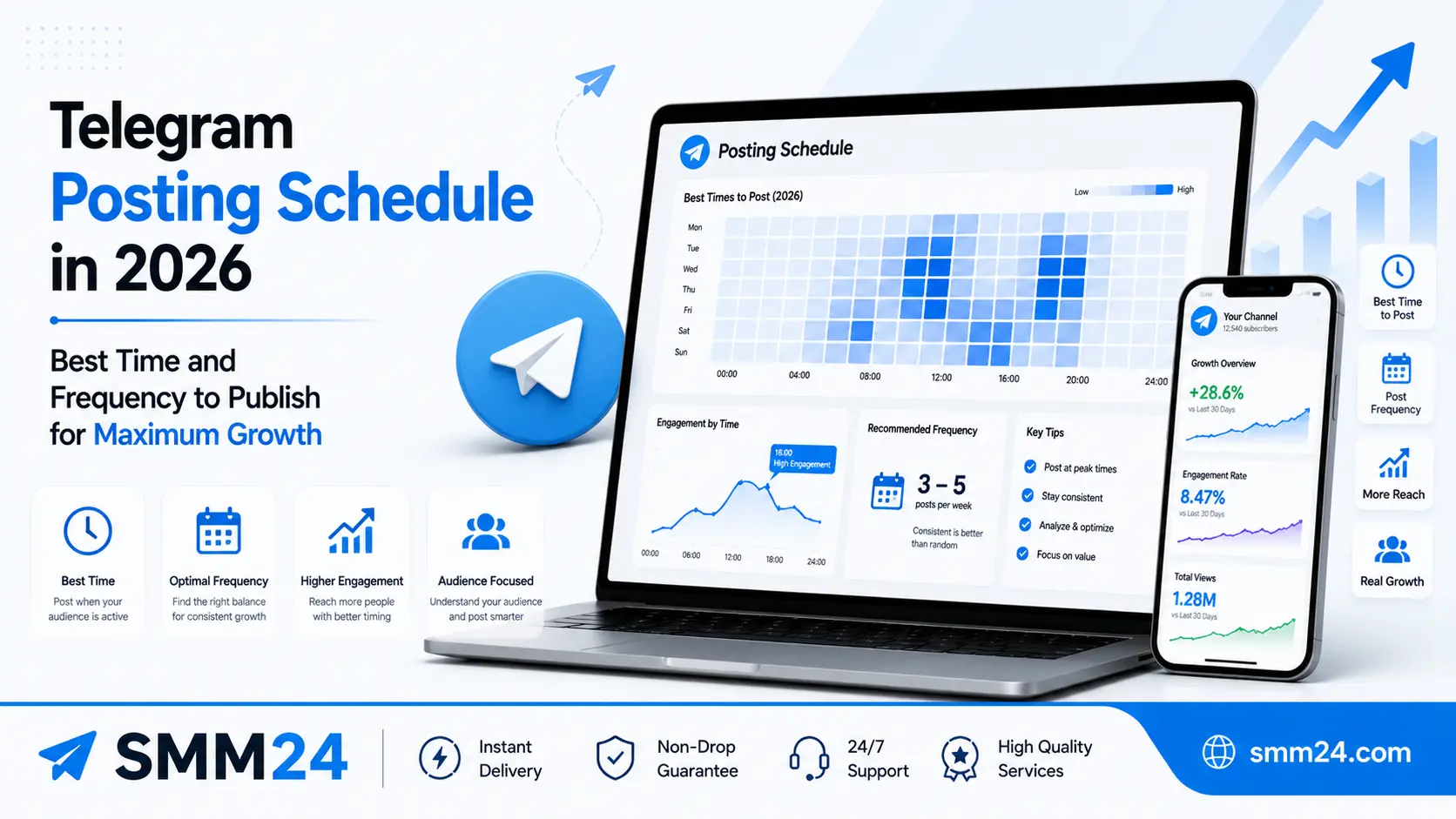
Growing a Telegram channel in 2026 isn't just about creating high-quality content. Even the best posts can perform poorly if they're published at the wrong time or with the wrong frequency. Many channel owners spend hours crafting valuable content but overlook one critical question: when should that content actually go live?
Finding the right posting schedule helps you maximize visibility, improve subscriber engagement, increase Story views, and maintain steady channel growth. But here's what most guides won't tell you: there is no universal "best time" that works for every Telegram channel. The ideal schedule depends on your audience, niche, content type, and subscriber behavior.
This guide walks you through how to build a posting schedule that fits your specific channel — instead of blindly following generic advice that was written for someone else's audience.
- Why Your Posting Schedule Matters
- Does Telegram Have a Best Time to Post?
- Start by Understanding Your Audience
- Consistency Is More Important Than Timing
- How Often Should You Publish?
- Morning or Evening? Testing Both
- Don't Ignore Telegram Stories
- Build a Weekly Publishing Routine
- Common Posting Schedule Mistakes
- How to Find Your Ideal Posting Schedule
- Posting Schedule Checklist
- Frequently Asked Questions
Why Your Posting Schedule Matters
Subscribers join Telegram channels because they expect consistent value. When posts appear randomly or inconsistently, engagement almost always declines over time — even if the content itself is strong.
A structured publishing schedule provides several important benefits:
- Improves audience expectations — Subscribers learn when to expect new content and build habits around it
- Increases post visibility — Predictable timing means subscribers are more likely to be active when you publish
- Encourages consistent engagement — Regular posting creates regular interaction patterns
- Supports long-term subscriber retention — Channels that disappear for days lose subscribers faster
- Makes content planning easier — A schedule eliminates the daily "what should I post?" decision fatigue
- Helps identify successful publishing patterns — Consistent scheduling makes analytics comparisons valid
Professional Telegram channels rarely publish randomly. Instead, they follow a repeatable publishing system that removes guesswork from the equation. If your content strategy needs a complete overhaul, Telegram channel content strategy in 2026 covers the full framework.
Does Telegram Have a Best Time to Post?
One of the most common questions channel owners ask is: "What is the best time to publish on Telegram?"
The honest answer: it depends entirely on your audience.
Telegram does not officially recommend specific publishing hours. Unlike some social media platforms that rank content through algorithmic feeds, Telegram delivers posts directly to subscribers. This means audience behavior matters far more than any fixed posting time you might find in a generic guide.
Consider how different audiences behave:
- Business professionals may engage during working hours (9 AM – 5 PM)
- Students often become active in the evening (6 PM – 11 PM)
- International audiences may be spread across multiple time zones
- Crypto and trading communities often remain active throughout the day
Rather than copying another channel's schedule, focus on understanding when your own subscribers are most active.
Start by Understanding Your Audience
Before choosing publishing times, ask yourself:
- Where are most of your subscribers located geographically?
- Which time zone represents the majority of your audience?
- Are they professionals, students, business owners, or enthusiasts?
- Do they browse Telegram during work hours or after work?
- When do they usually respond, comment, or forward posts?
The answers to these questions should shape your posting schedule far more than any generic recommendation. For a deeper dive into understanding audience behavior through data, Telegram channel analytics in 2026 — which metrics actually matter walks through the key signals to track.
Consistency Is More Important Than Timing
Many administrators constantly change their publishing hours hoping for better performance. In reality, consistency usually produces better long-term results than constantly chasing the "perfect" time.
Subscribers become familiar with channels that publish on a predictable schedule. If people know your educational guide appears every Monday morning or your weekly summary arrives every Friday evening, they're far more likely to build a habit of checking your content.
Consistency also makes content production significantly easier because you're following a planned routine rather than improvising every day. Instead of asking "What is the perfect time to post?" ask yourself: "Can I realistically maintain this schedule every week?"
Key insight: The channels that continue publishing consistently almost always outperform channels that publish heavily for one week and then disappear for several days. Reliability builds trust — and trust builds audiences.
How Often Should You Publish on Telegram?
There is no single posting frequency that works for every channel. Publishing too often can overwhelm subscribers and trigger notification fatigue. Publishing too rarely makes your audience forget about you.
Instead of chasing a specific number of daily posts, focus on maintaining a sustainable publishing rhythm. Here are general guidelines by channel type:
| Channel Type | Recommended Frequency | Notes |
|---|---|---|
| Educational | 1–3 posts per day | Quality over quantity — each post should teach something valuable |
| Business / Brand | 1–2 posts per day | Avoid turning into an advertising feed. Educate and solve problems |
| News / Updates | 5–15 posts per day | Speed matters, but even news channels should filter out noise |
| Community / Discussion | 1–4 posts per day | Balance announcements with polls, discussions, and member interaction |
Should You Publish Every Day?
Daily publishing can be beneficial — but only if you can maintain quality. If posting every day forces you to lower your standards, publishing fewer but higher-value posts is almost always the smarter choice.
Subscribers remember useful content much longer than frequent but forgettable updates. Quality builds loyalty. Frequency without quality destroys it.
Morning or Evening? Testing Both
Many people search for the perfect posting hour. The reality is more nuanced — and the only way to know for sure is to test.
| Time Window | Best For | Typical Audience Behavior |
|---|---|---|
| Morning (7–10 AM) | News, daily briefings, motivation | Checking Telegram before work or during breakfast |
| Midday (12–2 PM) | Quick tips, industry updates | Lunch break browsing |
| Afternoon (3–5 PM) | Case studies, deeper content | Afternoon focus time — longer attention spans |
| Evening (6–10 PM) | Educational guides, community posts | More free time, higher engagement on longer content |
Rather than relying on these ranges as rules, experiment with different publishing times for several weeks. Then compare your actual metrics: views, Story engagement, shares, and subscriber activity. Your own analytics provide far more reliable answers than any internet average. If your engagement has been declining, Telegram channel engagement dropping — how to recover lost reach offers a systematic approach to diagnosing and fixing the problem.
Don't Ignore Telegram Stories
Stories have become an essential part of Telegram channel activity in 2026. They allow administrators to stay visible between regular posts without overwhelming subscribers with additional channel notifications.
Many successful channels publish 1–3 Stories every day, including:
- Quick educational tips
- Behind-the-scenes updates
- Polls and interactive content
- Short announcements
- Content teasers for upcoming posts
Stories help maintain continuous audience engagement even on days when you publish fewer channel posts. They appear prominently at the top of the app and create regular touchpoints that keep your channel top-of-mind. For setup guidance, see how to enable Telegram channel Stories in 2026.
Build a Weekly Publishing Routine
Instead of deciding what to publish every morning — which drains mental energy and leads to inconsistency — create a repeatable weekly schedule. Here's an example framework:
| Day | Content Type | Purpose |
|---|---|---|
| Monday | Educational Guide | Start the week with high-value content |
| Tuesday | Industry News & Analysis | Keep subscribers informed |
| Wednesday | Quick Tips / How-To | Practical, actionable advice |
| Thursday | Case Study / Deep Dive | Build authority with detailed content |
| Friday | FAQ / Community Q&A | Engage directly with subscriber questions |
| Saturday | Story-Focused Engagement | Polls, behind-the-scenes, interactive content |
| Sunday | Weekly Recap + Community Spotlight | Summarize the week and highlight community contributions |
This is a template — not a rule. Adjust it based on your niche, audience preferences, and capacity. The key principle is predictability: subscribers appreciate knowing what kind of content to expect and when to expect it. Over time, this consistency helps strengthen audience loyalty and reduces unsubscribe rates.
Important balance: Aim for roughly 80% educational or valuable content and 20% promotional content. If every post asks people to buy something, engagement almost always declines — regardless of how perfect your timing is.
Common Posting Schedule Mistakes
Even experienced Telegram administrators sometimes make scheduling mistakes that reduce engagement and slow channel growth. Here are the most common ones — and how to avoid them.
Mistake 1: Publishing Too Much
More posts do not automatically mean more growth. Flooding your subscribers with constant notifications often leads to lower engagement, more muted notifications, higher unsubscribe rates, and audience fatigue. Your goal should be to provide value — not simply increase the number of posts.
Mistake 2: Disappearing for Days
The opposite problem is just as damaging. Many administrators publish consistently for a week and then stop posting entirely. Long gaps make your audience forget about your channel and reduce long-term engagement. Consistency always beats short bursts of activity followed by silence.
Mistake 3: Posting Without Reviewing Analytics
Your schedule should never remain fixed forever. Review your analytics regularly and ask: Which days perform best? Which hours generate the highest views? Which Stories receive the most engagement? Which publishing times encourage more forwards? Your audience will gradually tell you when they prefer to consume your content — but only if you're paying attention. For a complete framework, Telegram channel analytics — which metrics actually matter covers exactly what to track.
Mistake 4: Copying Other Channels
Many administrators simply copy the publishing schedule of larger channels in their niche. This rarely produces the same results because every audience behaves differently. Your own subscribers should determine your schedule — not another creator's audience.
Mistake 5: Ignoring Time Zones
If your audience spans multiple countries, publishing according to your local time may miss the majority of your subscribers entirely. Identify where most of your subscribers live and schedule important posts accordingly. International channels often benefit from testing several publishing windows before committing to a permanent schedule. If growth has stalled despite consistent posting, Telegram channel growth stuck — 10 reasons why covers the most common causes beyond scheduling.
How to Find Your Ideal Posting Schedule
The best publishing schedule is discovered — not guessed. Here's a simple four-week testing framework:
| Week | Action | What to Track |
|---|---|---|
| Week 1 | Publish mainly in the morning (7–10 AM) | Views, engagement, shares |
| Week 2 | Move the same type of content to afternoon (12–3 PM) | Compare vs Week 1 |
| Week 3 | Test evening publishing (6–9 PM) | Story performance, forwards |
| Week 4 | Compare all results and identify patterns | Pick the winning window |
After four weeks, clear patterns usually begin to appear. Use those insights to refine your long-term schedule — then retest quarterly as your audience grows and evolves. For a comprehensive evaluation of your entire channel setup, the Telegram channel audit checklist provides a systematic framework that goes beyond just scheduling.
Telegram Posting Schedule Checklist
Before finalizing your publishing plan, run through these questions:
- Can I maintain this schedule consistently — not just for a week, but for months?
- Does it match my audience's primary time zone?
- Am I prioritizing quality over quantity?
- Have I reviewed my analytics recently to validate my choices?
- Am I leaving enough space between posts to avoid overwhelming subscribers?
- Do Stories support my regular publishing schedule?
- Is my promotional content balanced (roughly 20% or less)?
If you answered yes to most of these, your schedule is likely sustainable and audience-friendly. If not, the areas where you hesitated are probably where you should focus your attention first.
Frequently Asked Questions
No. The best publishing time depends on your specific audience, niche, and subscriber behavior. Testing different time slots with your own channel consistently produces more reliable results than following generic recommendations. What works for a crypto channel in Asia may completely fail for a business channel in Europe.
Quality matters more than quantity. Most educational and business channels perform well with 1–3 valuable posts per day. News channels may publish 5–15 times daily. The key is maintaining consistency without sacrificing content quality — subscribers remember useful content far longer than frequent but forgettable updates.
Daily publishing can be beneficial if you can maintain quality. If posting every day forces you to lower your standards, publishing fewer but higher-value posts is the smarter long-term approach. Many successful channels publish 4–5 days per week rather than forcing daily content that doesn't deliver real value.
Yes. Small adjustments based on your own analytics often produce better results than continuing with an ineffective schedule. Track views, Story engagement, shares, and subscriber activity across different publishing times to identify what works best for your specific audience.
Final Thoughts
There is no universal Telegram posting schedule that guarantees success. The channels that grow consistently are not necessarily those that publish the most — they're the ones that publish valuable content at a sustainable pace for the right audience.
Your publishing schedule should evolve as your channel grows. Continue reviewing your analytics, testing new publishing times, and refining your strategy based on real subscriber behavior rather than generic online advice. For ongoing channel optimization, Telegram channel SEO in 2026 covers how to make your content more discoverable — because even the best posting schedule won't help if people can't find your channel in the first place.
Over time, these small improvements compound into stronger engagement, better retention, and healthier long-term channel growth. The key is to start testing, stay consistent, and let your audience's actual behavior — not anyone else's — guide your decisions.